From MQLs to Meaningful Metrics: The Shift Toward Revenue-Centric GTM Strategies
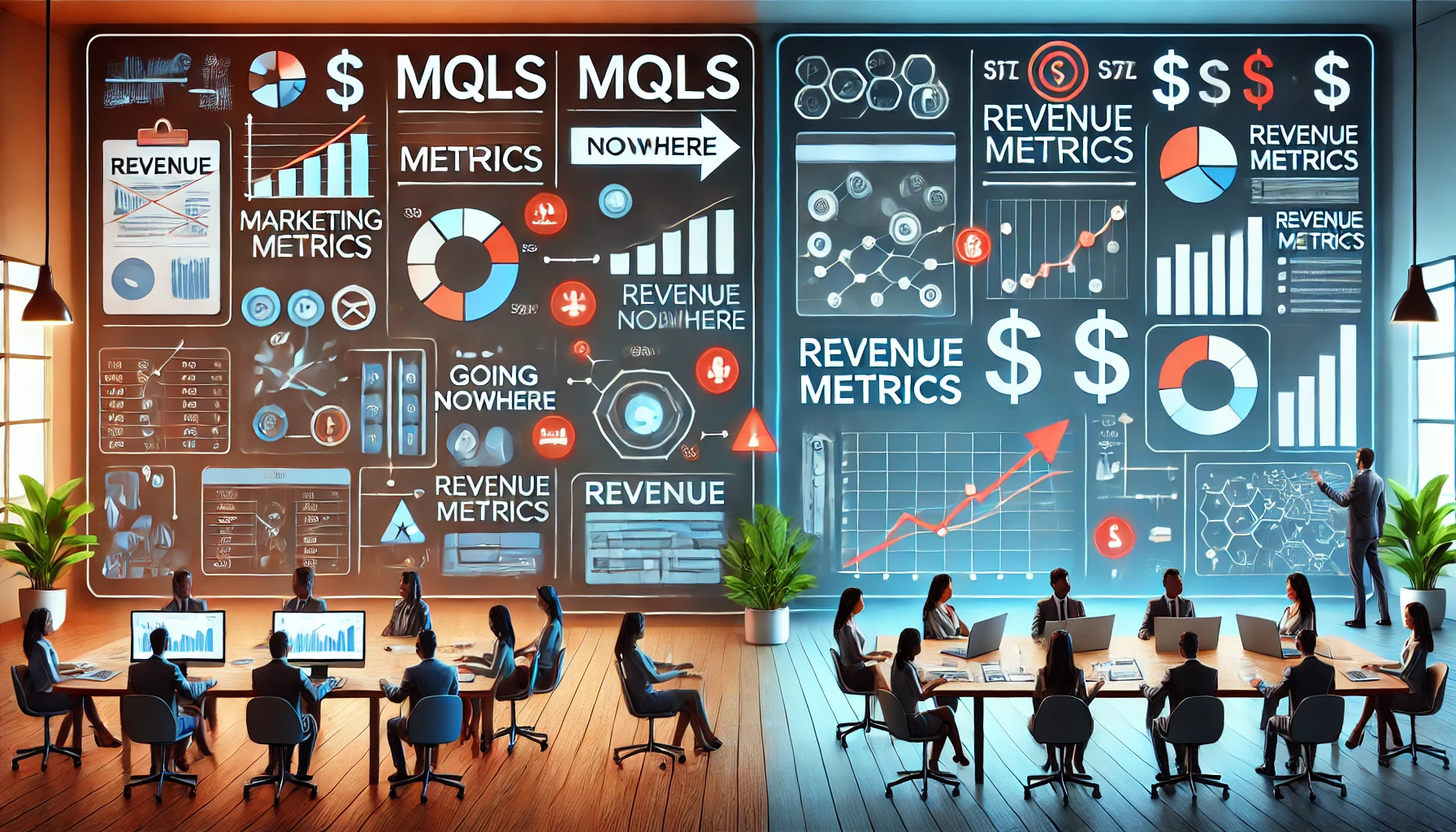
For years, MQLs (Marketing Qualified Leads) were the default measure of success for marketing teams. They made sense in a world where lead volume was the goal and conversions were a downstream mystery. But the game has changed.
Modern go-to-market (GTM) teams are no longer playing for vanity metrics. They're optimizing for revenue. And that shift is transforming how companies measure, align, and scale growth.
Why MQLs No Longer Cut It
MQLs focus on surface-level engagement. A form fill. A content download. Maybe a few clicks.
But do those actions predict revenue? Often, they don't. MQLs create friction between marketing and sales because they don't clearly indicate intent, readiness, or fit.
Instead, high-performing GTM teams are adopting revenue-centric metrics like:
Customer Lifetime Value (CLV)
Sales-qualified opportunity creation rate
Pipeline velocity
Closed-won attribution by campaign
ROI on acquisition spend
These are the metrics that move the needle.
How Marketing & Sales Must Align
This isn't just a marketing problem. It's an organizational one. Success demands tighter alignment between marketing, sales, and customer success:
Marketing
Stops optimizing for volume
Starts optimizing for pipeline and revenue contribution
Builds campaigns with sales input
Targets ICPs with buyer-level personalization
Sales
Gets better lead handoffs
Prioritizes outreach to accounts showing real intent
Partners with marketing to refine messaging and feedback loops
When both teams operate on shared revenue goals, the finger-pointing fades. Collaboration replaces blame. Revenue becomes everyone's business.
The Role of CRM and RevOps
The engine behind this shift? Your CRM. But only when it's properly set up.
CRM teams and RevOps leaders play a crucial role in making revenue-centric GTM motion a reality. They:
Centralize engagement and attribution data
Enable clear pipeline visibility
Build workflows that support buyer journeys
Configure dashboards that reflect true revenue impact
Without a clean, aligned system, it's impossible to shift the strategy.
Barriers to Watch Out For
Legacy KPIs: Teams may be attached to old metrics like MQLs because they're easy to hit.
Tech silos: Disconnected tools make it hard to track full-funnel influence.
Org resistance: Shifting to revenue metrics requires cross-functional buy-in.
Skill gaps: Many teams aren't trained to think in terms of CAC, CLTV, or pipeline velocity.
These aren't small hurdles. But they are solvable with the right leadership and investment.
What Leaders Need to Do Now
If you're in charge of GTM, RevOps, or executive leadership, here's your move:
Redefine success metrics. Break up with MQLs. Realign to revenue.
Invest in CRM and analytics. Your data systems need to match your strategy.
Encourage experimentation. Run pilots with new scoring models and handoff workflows.
Foster cross-functional collaboration. Break down the walls between sales, marketing, and CS.
The Bottom Line
MQLs won't scale your company. Revenue will.
By embracing revenue-centric thinking across your GTM strategy, you'll:
Improve sales efficiency
Increase pipeline confidence
Eliminate wasted marketing spend
Strengthen customer relationships
This isn't just a metric swap. It's a mindset shift and a massive competitive advantage.
Ready to move beyond MQLs and start building a revenue engine that works? Let's talk about how we can optimize your GTM strategy for real growth.