Why Your Salesforce Forecast Is Wrong Even When the Data Looks Clean

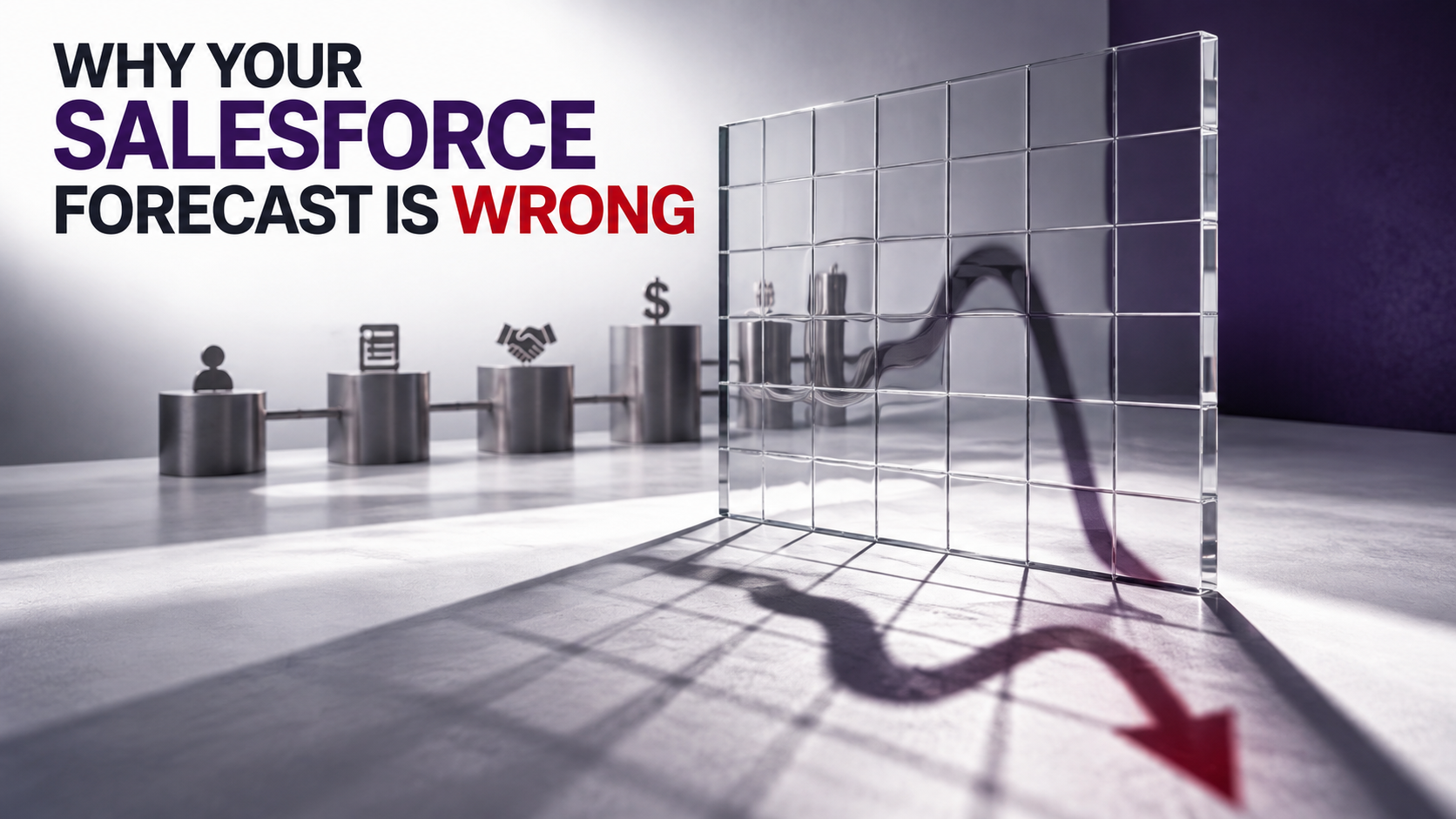
A Salesforce forecast can be wrong even when every required field is complete. Clean data only proves that values exist and follow a format. Forecast accuracy depends on whether stages reflect buyer evidence, close dates reflect a real decision process, and managers apply consistent judgment.
You can have perfect picklists and still have an unreliable forecast.
Clean Data Is Not the Same as Honest Data
A close date can be valid and unrealistic. A stage can be populated and unsupported. An amount can be precise and based on an early assumption. Data-quality rules catch missing values; they don't determine whether the business meaning is credible.
Stage Definitions Create the Baseline
When sellers advance opportunities based on completed activities, optimism, or pressure, the forecast inherits that distortion. Build Salesforce opportunity stages people can trust around buyer commitments and exit criteria.
Close Dates Need a Buyer Event
A close date should connect to contract execution, board approval, budget availability, renewal, launch, or another real milestone. The final day of the month is a reporting preference—not a buying process.
Forecast Category and Stage Do Different Jobs
Stage represents progress. Forecast category represents judgment about whether the opportunity will close in the period. Treating them as identical removes the ability to express risk.
Pipeline Inspection Must Challenge the Story
The business problem and impact
Access to decision makers
Decision criteria and process
Competition and cost of doing nothing
The next buyer action
Commercial, legal, security, and procurement steps
Risks that could move timing or value
The purpose isn't to punish sellers. It's to replace assumptions with evidence early enough to act.
Historical Conversion Needs Context
Average conversion rates can hide meaningful differences by segment, product, source, seller tenure, deal size, and motion. Use history as a reference and segment it where the operating reality differs.
Slippage Is a System Signal
Repeated close-date movement may indicate weak qualification, late stakeholder engagement, an unrealistic process, or pressure to keep deals in-period. Track push count and value, not only the current date.
Ownership and Governance Matter
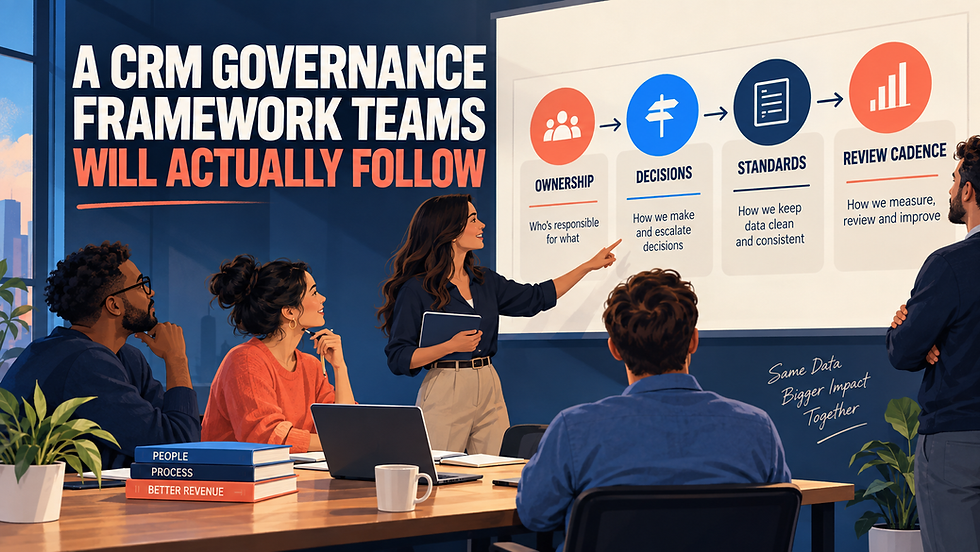
Someone must own stage definitions, forecast categories, inspection standards, and model changes. Use a CRM governance framework to define decision rights.
Compare Forecast Quality, Not Just the Number
Accuracy by forecast category
Slippage rate and push count
Stage conversion and time in stage
Amount changes
Opportunities created and closed in-period
Manager overrides
Commit misses and unexpected wins
Fix the Operating System Behind the Forecast
Start with stage evidence, close-date discipline, inspection quality, ownership, and feedback. Then improve reporting and models.
The Revenue Operating System Framework connects forecasting to process, data, governance, and management cadence. The CRM Health Grader can surface broader risks.
About CRM Hacker
CRM Hacker helps scaling companies build Salesforce, RevOps, and AI-ready revenue systems that reduce operational chaos and improve visibility. Explore our Salesforce consulting services or Contact CRM Hacker to improve the operating discipline behind your forecast.


Comments